How I’d Design Florals for a Glass House Wedding Venue
While I haven’t designed a full glass house wedding yet, it’s been at the top of my list for a while! I think about it more than I probably should. As a former interior designer, I love how the architecture of a glass house steps forward as a design element in its own right – it’s what frames the indoor/outdoor connection and lets the landscape in. If you’re planning for your own glass house wedding venue florals, here’s the first thing I’d tell you: the space isn’t a backdrop you decorate around – it’s a material you’re designing with, right alongside your flowers. That changes everything, from color to timing to how you protect every bloom once the sun comes out.
Here’s what we’re getting into:
- Why glass architecture changes the way I think about floral design
- How light and color work together in an all-glass space
- The care every bloom needs to survive a glass house environment
- The palette and textures I’d choose for a glass house wedding
- The most common mistake I see couples make with this kind of venue
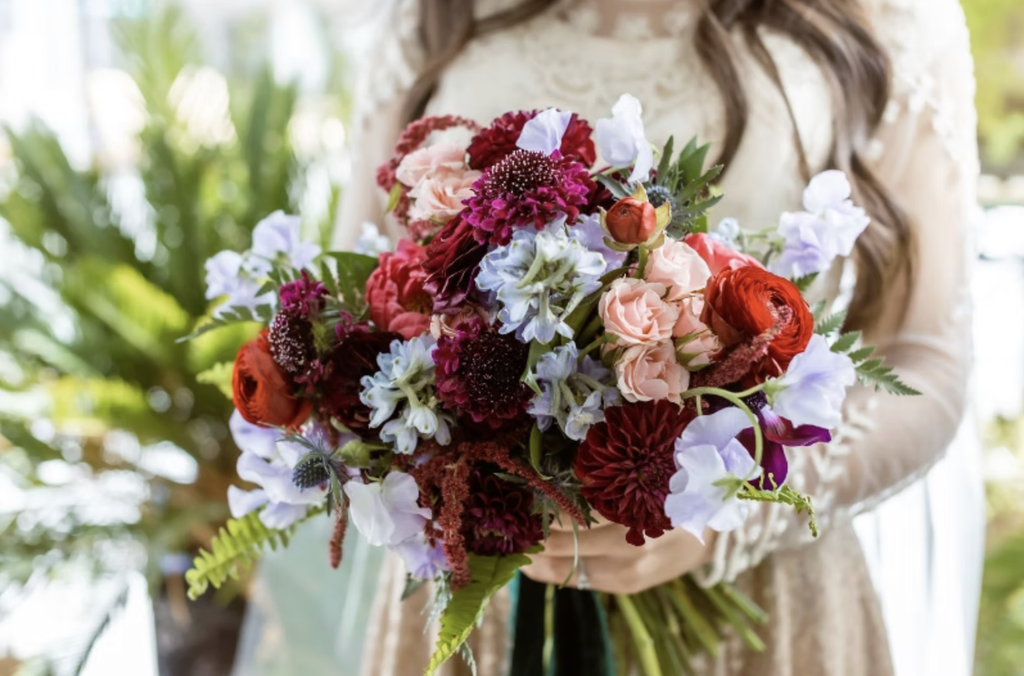
What Makes Glass House Wedding Venue Florals Different
A glass house isn’t just a pretty backdrop. It’s similar to a tent, in that it provides an open flow between the “indoors” and “outdoors”, but is a permanent structure. Rather than disappearing into the background, the structure becomes part of the story, and that’s really the ultimate canvas for floral design.
It’s also a canvas with a catch: the sun is still hitting the flowers. Most glass conservatories have UV film on the upper sections, but that to some extent, they don’t completely protect the flowers from the effects of the sun hitting the building all day! Air conditioning helps with temperature, but a structure with this little insulation can only do so much, and the same problem flips in colder months, when heaters can be just as hard on flowers as direct sun.
The biggest way to prevent issues with flowers is the same as always: hydration, hydration, hydration! In my dreaming and ruminating on how I’d produce a glass house or conservatory wedding, I emphasize waiting until the last moment to set florals for ceremony or reception, keeping them cool and out of sunlight as much as possible, and focusing on designs that provide water to the stems. Plus a little misting of each arrangement before they’re set never hurts!
Working With the Light: Color, Texture, and Golden Hour
Lighting is a huge factor in any floral design, and in a glass house, it’s working overtime. The color tones in your flowers can change a bit depending on the lighting, just like paint does on the walls of a room. I’m a natural-everything girl, and natural light on florals will always create the most beautiful, warm, authentic coloring of each bloom.
That’s exactly why color, texture, and negative space matter so much here – that’s where the lighting gets space to actually play, and where the shadows get to fall as the sun sets. Glass venues also tend to skip significant overhead lighting beyond a chandelier or two, so this is just the moment to utilize candlelight! It’s so beautiful to watch the florals dance in natural light in the afternoon, catch the golden hour glow in the evening, and then soften into candlelight once the sun goes down.
Choosing a Color Palette
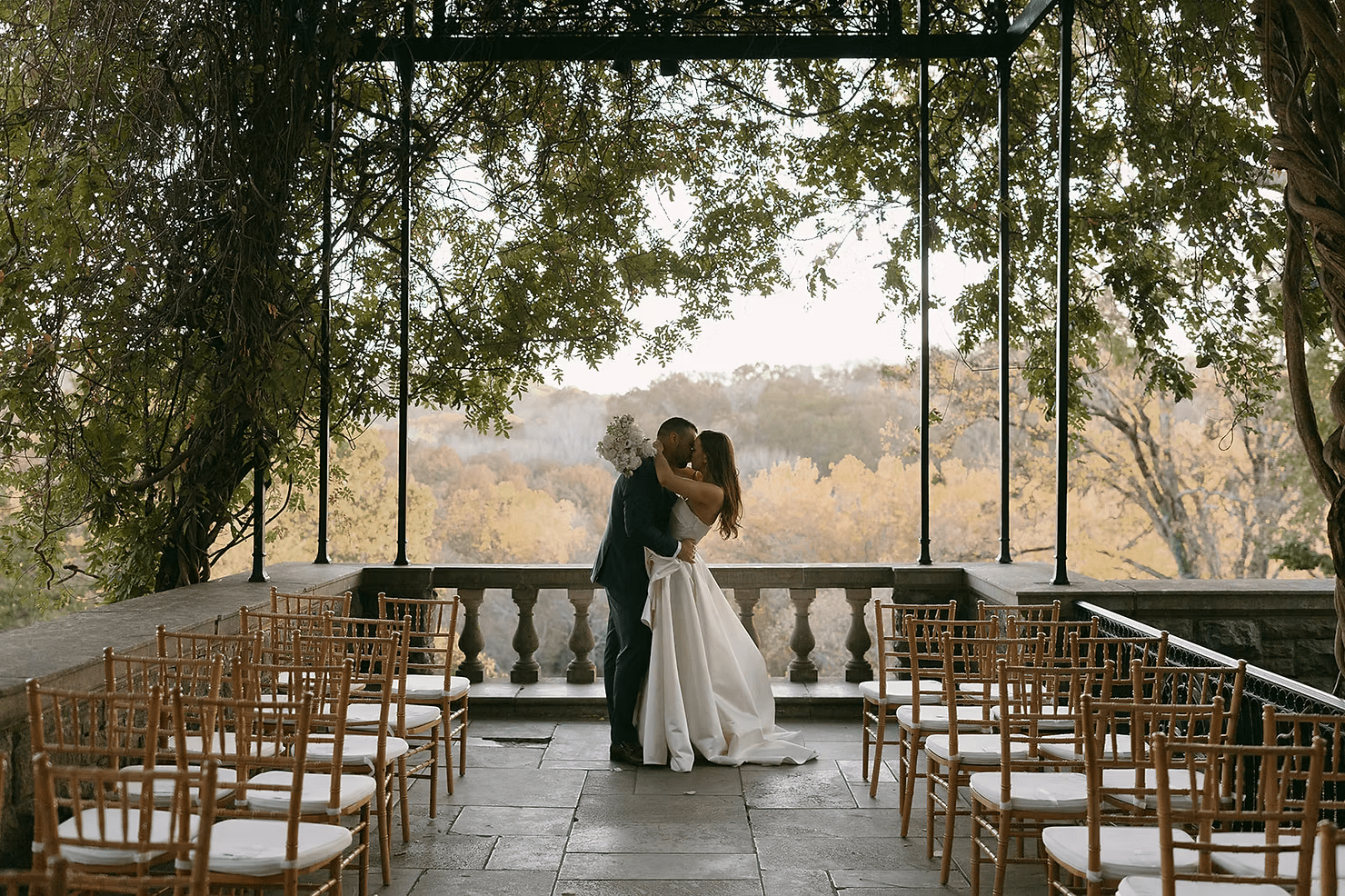
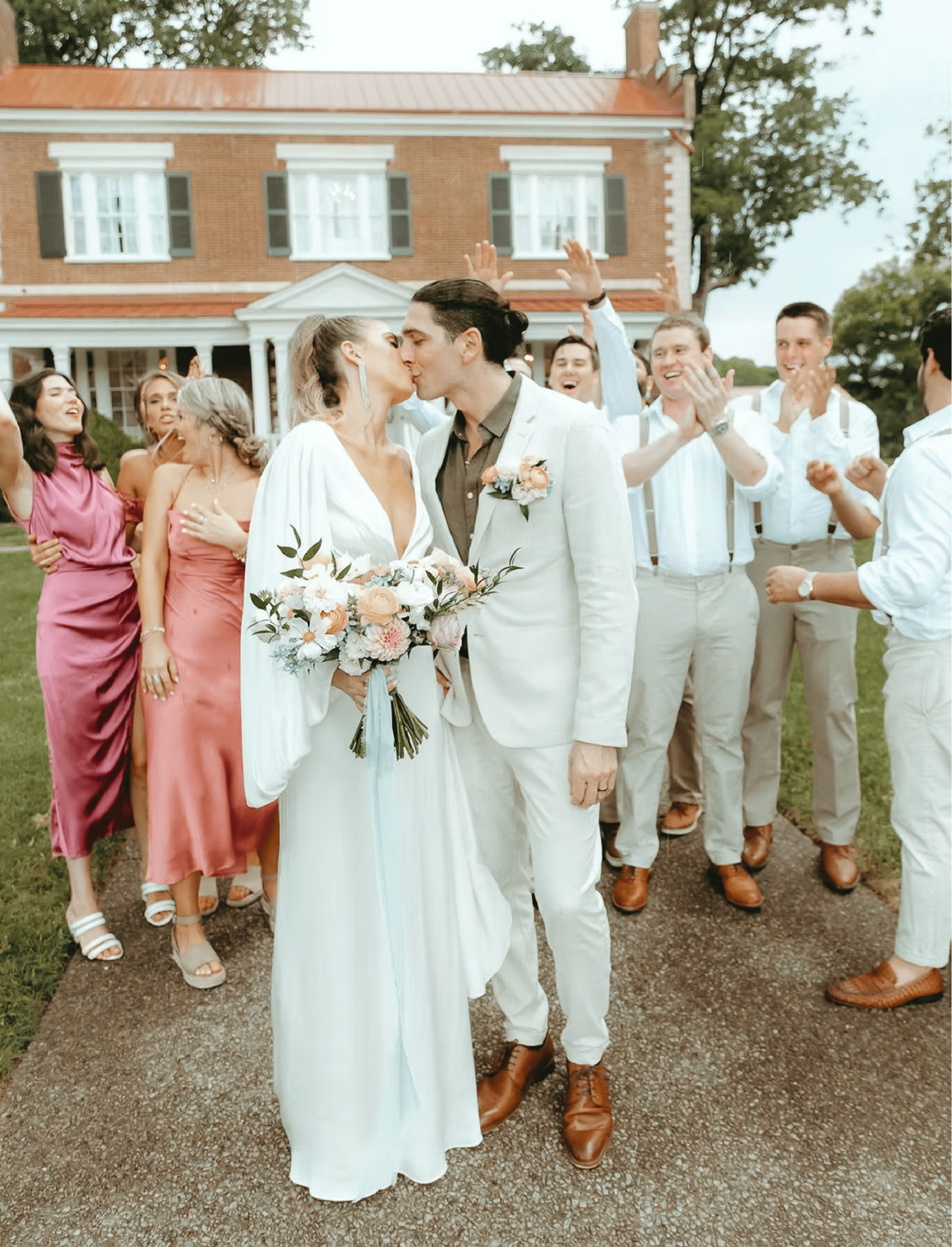
The right palette depends a lot on the specific glass venue you’re working with – think The Glass House at Nicholas Heir in Sevierville, TN, versus Stonehaven in Section, AL, versus Wynchester Gardens outside Tulsa, OK. Three very different architectural styles, three very different venue vibes, and your florals should respond to that.
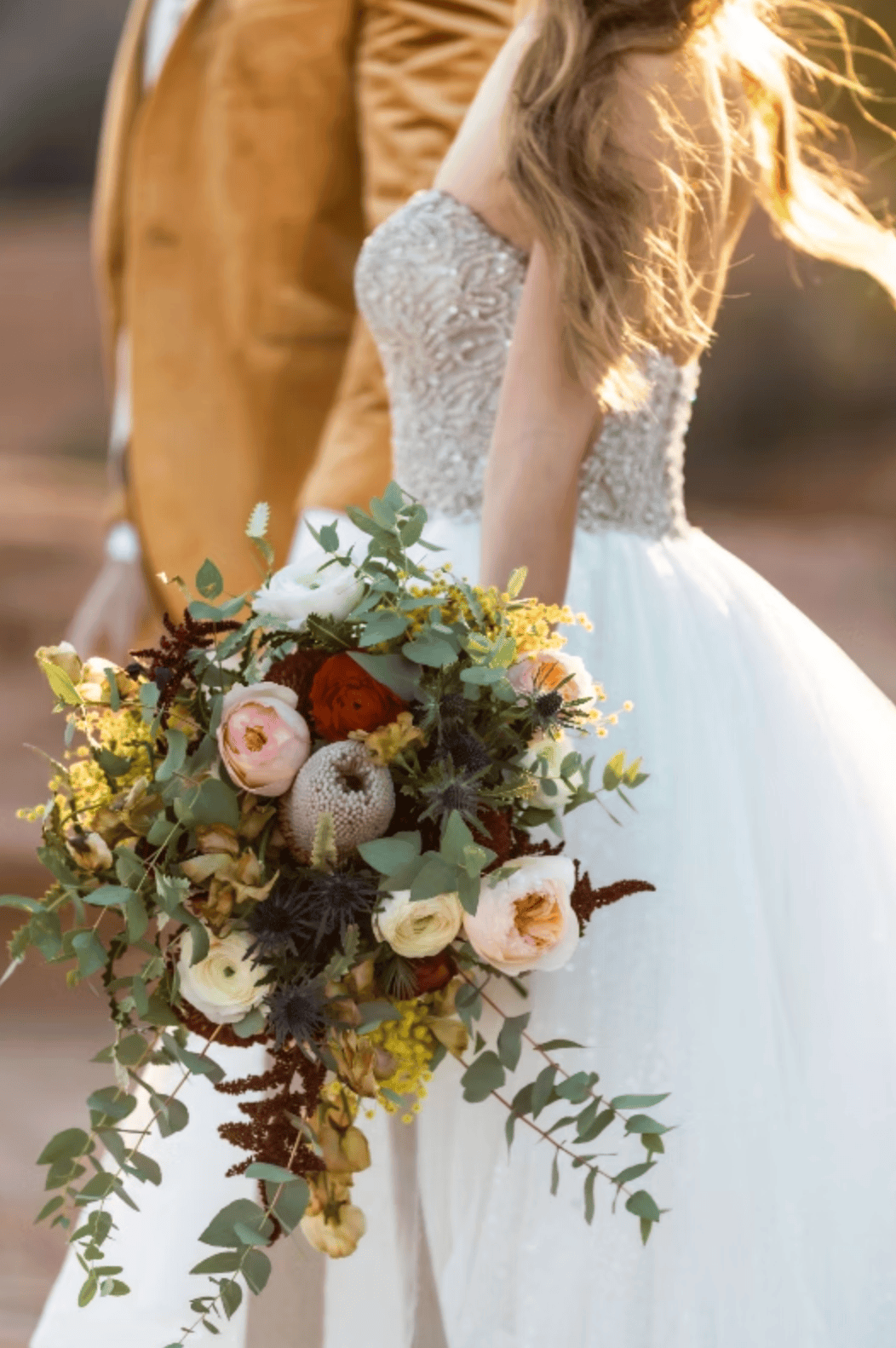
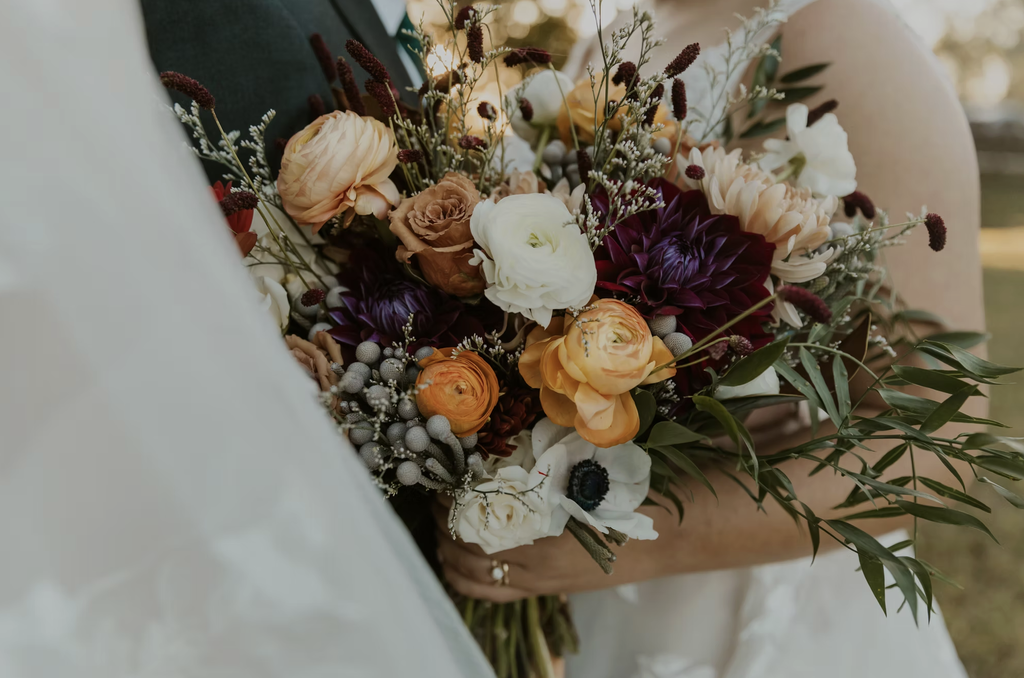
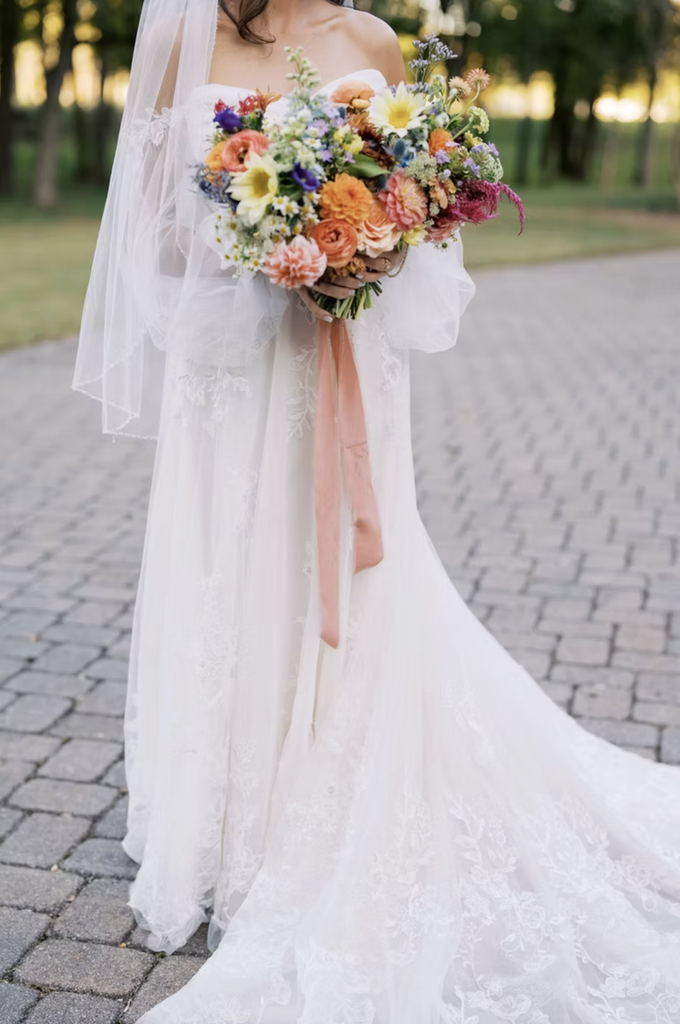
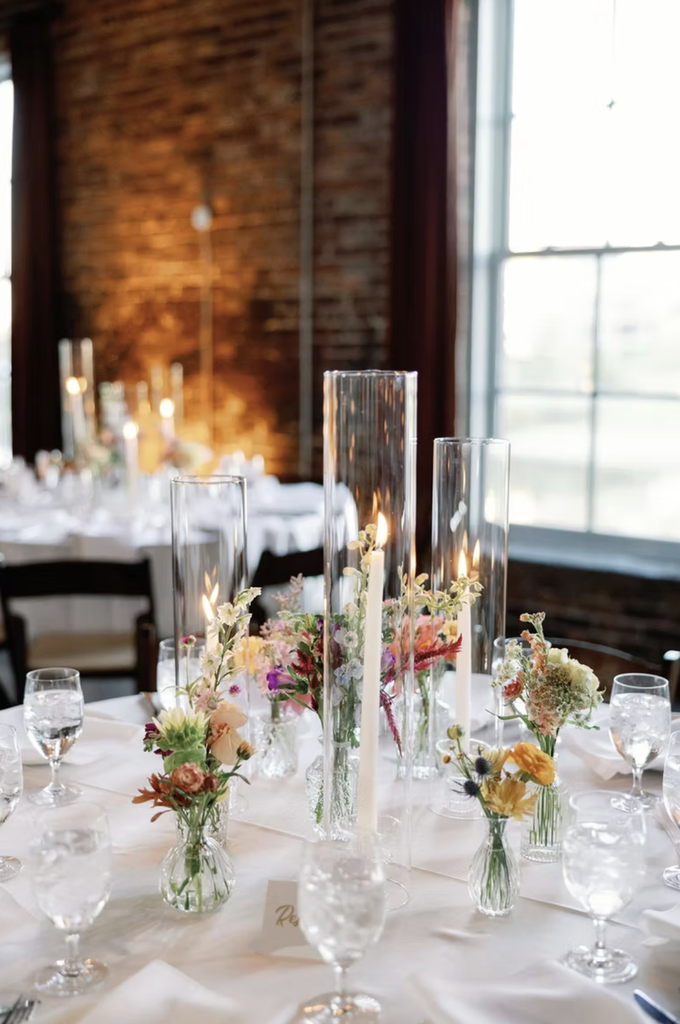
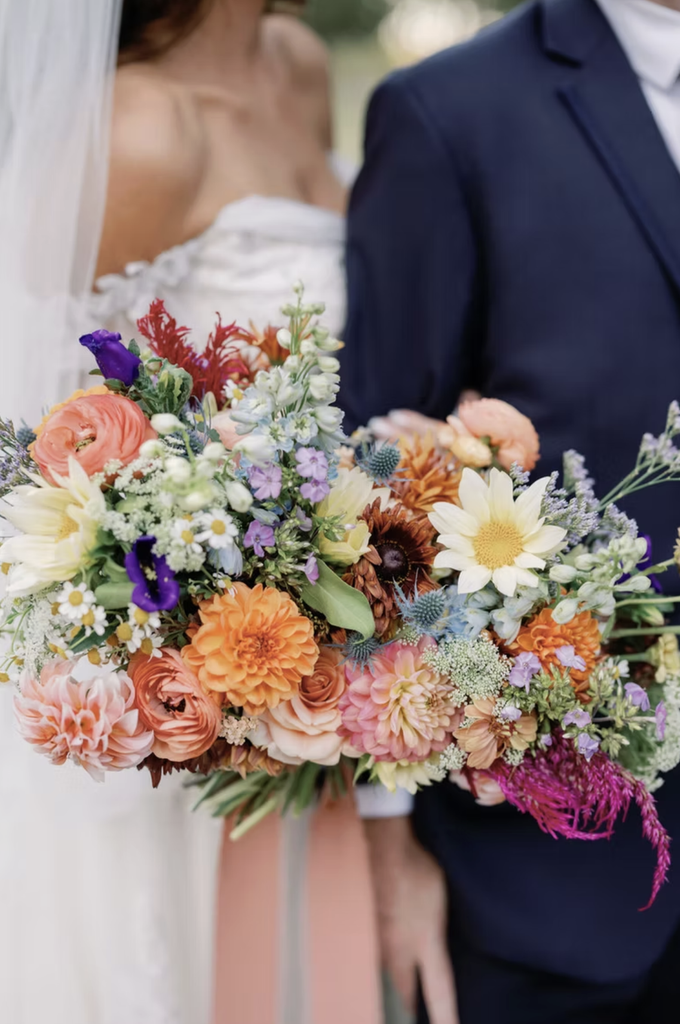
Just as important is the color palette itself. Cooler tones (whites, light blues, some blushes) – read as clean, but can feel more stark against that style of venue. Darker, moodier jewel tones bring a warm, but heavier, weighted vibe. Bright colors spark an excitement and energy that’s beautiful, but can possibly clash with the refined structure of a glass conservatory or glass house. If it were me, I’d go for a warm, muted palette focusing on three to four key shades of color, with accentuating colors around those.
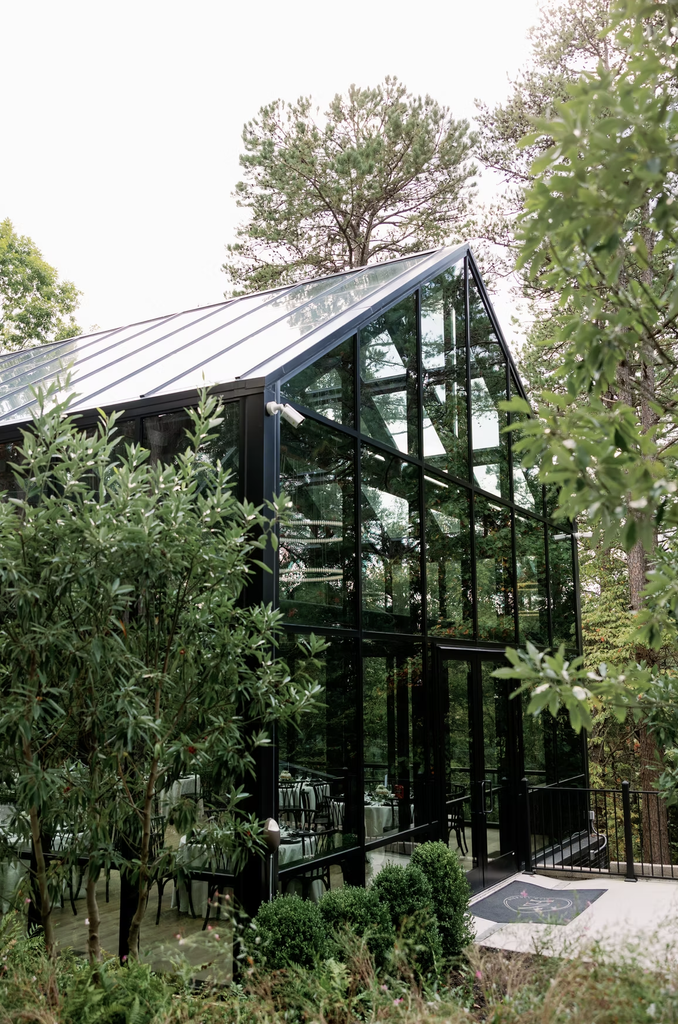
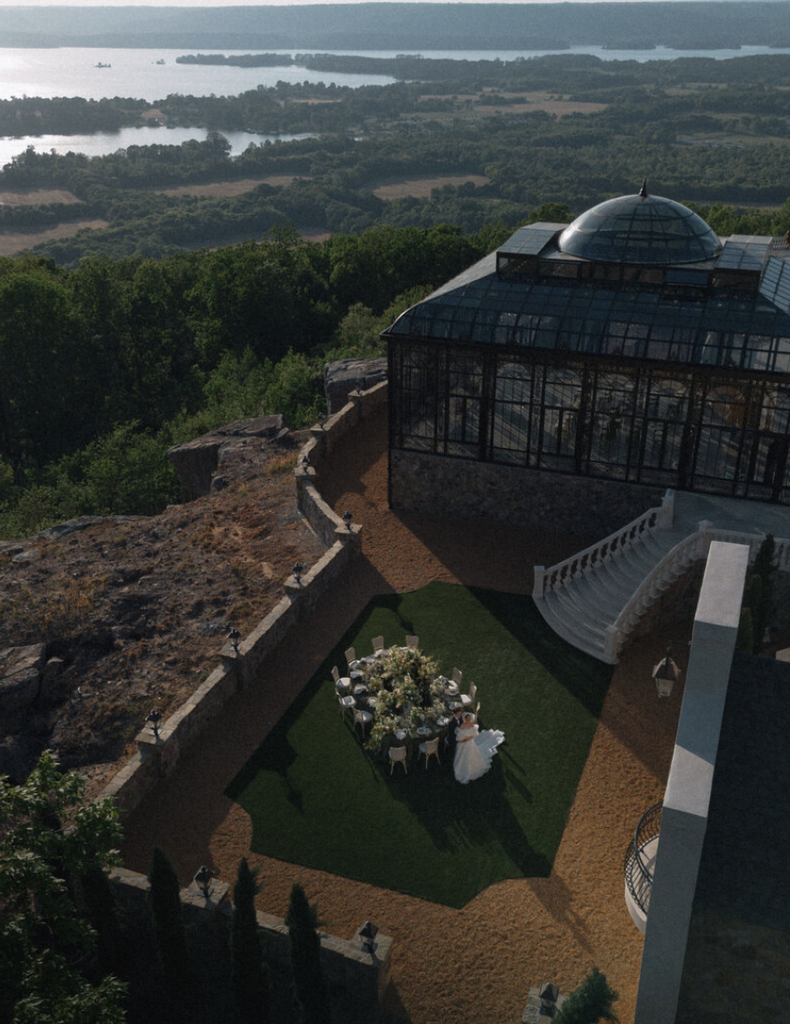
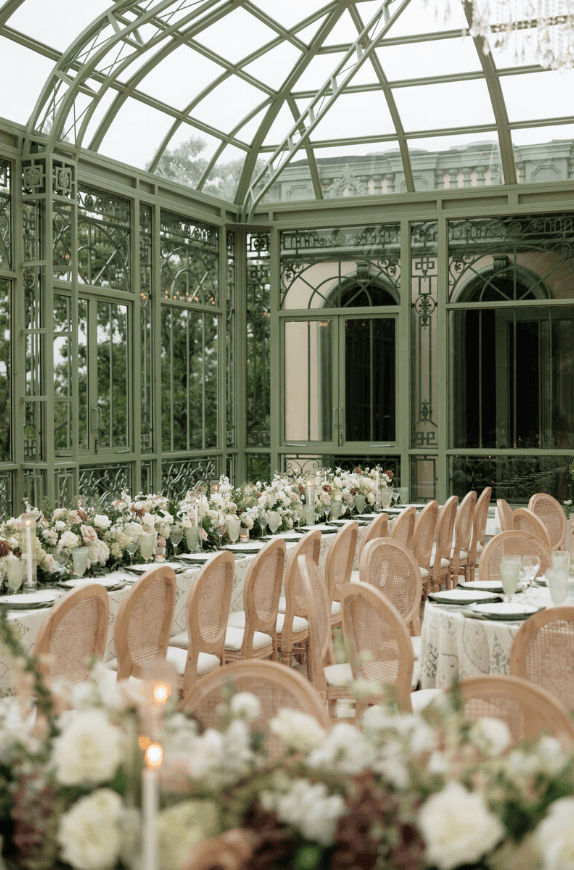
Images pulled from following venues: The Glass House at Nicholas Heir, Stonehaven, and Wynchester Gardens
The Biggest Mistake to Avoid in a Glass House Venue
One oversight I see often is mismatching your aesthetic to the architecture itself. If you choose a sleek, modern glass house, trying to pull off a classic Bridgerton-style vibe is going to fight the space instead of complementing it. The same goes in reverse – dropping a super clean, minimal design into an ornate, detailed glass conservatory will feel just as out of place. The style of the venue should inform the style of the wedding, not the other way around.
The other thing I’d tell every couple is to scale your florals to match the scale of the venue. Glass houses tend to be grand, open spaces, and going too minimalistic can leave a noticeable hole in the design – the florals need enough presence to hold their own against all that architecture and light.
If you want a deeper look at how I think about pulling a wedding’s full floral design together, from the ceremony space to every reception detail, I’ve written more about my full-service design process here.
Frequently Asked Questions
What makes floral design for a glass house wedding venue different from other spaces?
Mostly light and heat. A glass house lets the sun hit your flowers all day, which most other indoor venues don’t have to deal with. It changes how I time everything, from when florals get set to how they’re kept hydrated beforehand.
Do glass house weddings need special flower care for heat and sunlight?
Yes. UV film on the glass helps, but it doesn’t fully protect your blooms, and air conditioning can only do so much in a structure with limited insulation. I always build in extra hydration, keep florals out of direct sun until the last possible moment, and give arrangements a light mist right before they’re set.
What’s the best color palette for a glass house or conservatory wedding?
It depends on the venue’s style, but in general, I lean toward a warm, muted palette built around three or four key shades. Cooler tones can feel stark against all that glass, and very bright colors can clash with a refined structure – warmth tends to win.
Can a glass house venue work for an indoor-outdoor ceremony?
That’s actually the whole appeal. A glass house gives you an open canvas, with the flexibility to blend an indoor structure with an outdoor landscape in a way a fully enclosed venue can’t.
How far in advance should I book my florist for a glass house wedding?
As early as you can, honestly. Glass house venues are still fairly rare, and the earlier we start talking through your vision, the more room we have to design something that really uses the space instead of working around it.
A Glass House Wedding I’m Dreaming About
I haven’t taken on a full glass house wedding yet, but it’s high on my list – I got a small taste of it designing for an open house at The Beeches in Springfield, TN, and it only deepened my excitement for the format. A few glass houses I’ve been dreaming about working in lately: Morning Glory Farm outside Charlotte, NC, The Grove at Horn Springs in Lebanon, TN, and Stonehaven Venue in Section, AL. And honestly? I’d love to see a glass house or conservatory pop up somewhere in Montana, Idaho, or Wyoming, looking out at a mountain backdrop – there are very few of these venues out west right now.
If I got to design that wedding today, here’s what it would look like: an early fall evening with a bit of chill in the air, guests dressed in satins, velvets, and prints, with a hint of fringe, plaids, and cowboy hats. An outdoor ceremony overlooks the mountains, with simple hewn benches instead of rows of white chairs. As the sun starts to dip, guests arrive at the reception and the chill sets in fully. Outside the glass, golden aspens and dry prairie grass catch the last of the light; inside, the warmth builds with patio heaters and string lights glowing against the fading blue of the mountains.
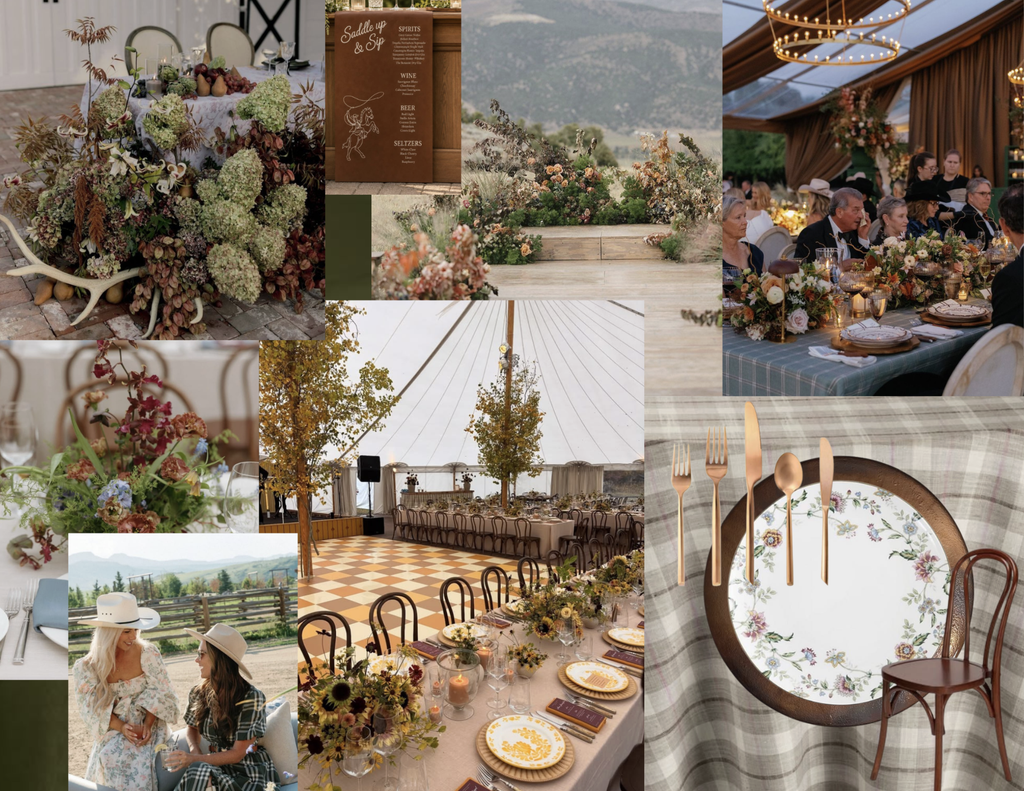
The palette would lean into rust, terracotta, and burnt sienna, deepened with moody plum and burgundy blooms, warmed by mustard and soft light blue, and grounded with a grey plaid linen for contrast. I’d layer in antique-green hydrangea, butterfly ranunculus, and garden roses still fully alive, alongside foraged pears, grasses, fall leaves, and antler sheds tucked into the base of each arrangement. It all feels gathered from the land – which is exactly the point when the backdrop itself is permanent, elegant architecture rather than fabric.
The tablescape would carry plaid linen, olive velvet cocktail linens, and hand-painted china layered over rustic, textured bronze chargers, copper silverware, smoky grey ribbed glassware, and wishbone or crossback chairs in warm, honeyed wood. Somewhere in the mix, one playful western wink – a leather bar menu, maybe, or table numbers – just enough to say “the West” without tipping into costume. Not rustic barn-western, and not stark modern glass minimalism. Something in between, warm and elevated, where the glass house becomes the frame, the landscape supplies the drama, and the tablescape carries all the warmth in between.
That’s really the whole point of a glass house: it leaves you with a pretty open canvas – the kind of space that has “scope for the imagination,” as Anne of Green Gables would say. Filling that canvas is a big job, but that’s also the beauty of it. Because of the indoor/outdoor feel, a glass house is one of the best styles of venue to really infuse with your own personality, rather than fitting into someone else’s version of a wedding.
The venue and the florals have to work as true partners here – the architecture is doing a lot of visual work on its own, and the florals need to rise and meet it in scale, color, and style, without fighting it or disappearing into it. When that balance is right, it becomes a space that feels completely, unmistakably yours.
Let’s Design Yours
If a glass house wedding is somewhere on your vision board – whether it’s already booked or still just an idea you can’t shake – I’d love to help you bring the florals to life. This is exactly the kind of design work I get most excited about: a space with enough character to push me creatively, and a couple who trusts me to meet it. Reach out and let’s start talking about what your day could look like.
About The Floral Pop
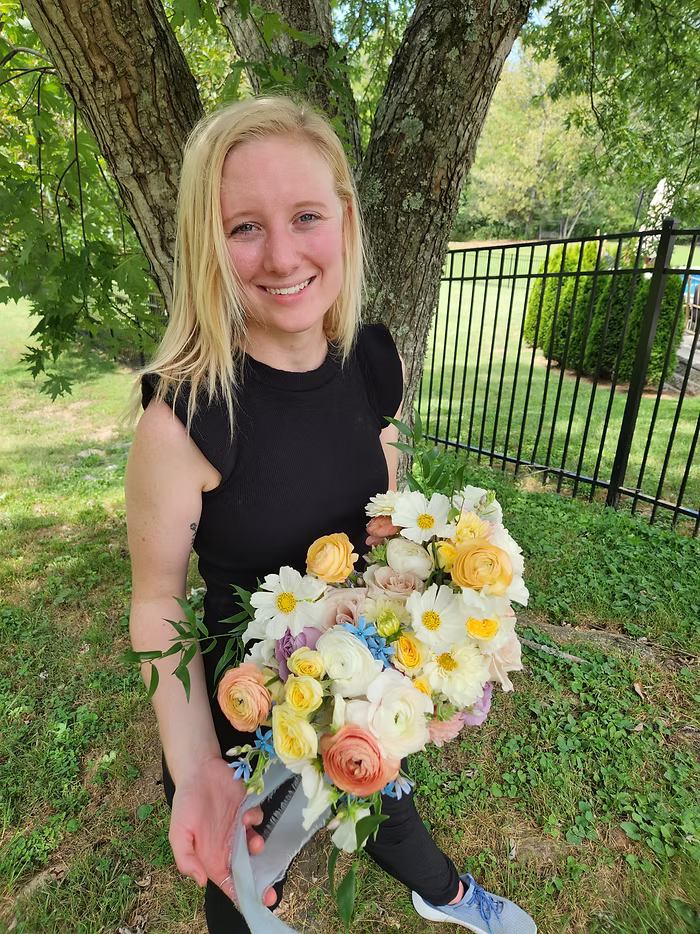
The Floral Pop is a Nashville-based wedding and event floral design studio, gathering blooms into arrangements that feel rooted in a couple’s story rather than a trend.
Maegan and her team also travel for destination weddings across Montana and, soon, the Tetons, bringing the same hand-placed care to mountain landscapes that she brings to every Nashville ceremony.
Flowers on a mission, one wedding at a time.